

 Introduction
Human creativity has always thrived on both originality and inspiration drawn from pre-existing works. From Shakespeare’s timeless plays to Leonardo da Vinci’s masterpieces, creative expression is rarely isolated. Today, this dialogue between creators and audiences has taken a new form: fandom. Fans nowadays, no longer just consume stories but they actively reshape them, explore untold angles and expand fictional worlds.
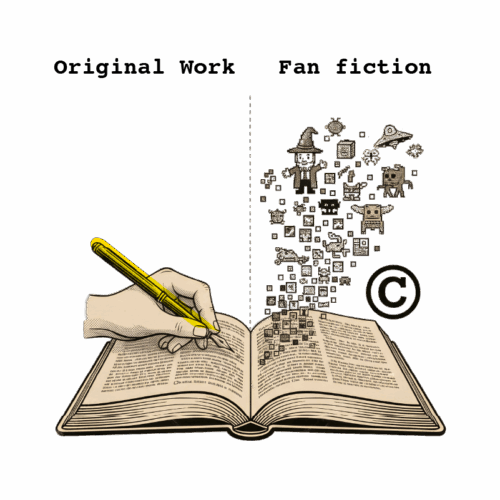
One of the most fascinating expressions of this participatory culture is fanfiction. These are stories written by fans, reimagining characters, plots or entire universes from books, movies, TV shows or games. Traditionally, fanfiction has been a non-commercial labour of love, a way for fans to engage deeply with the content they love. But in the digital age, platforms like Wattpad, Patreon, and Amazon Kindle Direct Publishing have opened the door to monetization, bringing both exciting opportunities and tricky legal questions.
Fanfiction and Intellectual Property Law
Fanfiction occupies a precarious position under copyright law because it inherently relies on pre-existing works. Under Indian law, Section 14 of the Copyright Act, 1957, grants authors exclusive rights, including the right to reproduce, adapt and authorize derivative works. Consequently, fanfiction can be considered a derivative work, potentially infringing upon these exclusive rights if created or distributed without permission.
Globally, jurisdictions approach this issue differently. The United States, through doctrines such as “fair use,” allows certain derivative works if they are transformative, non-commercial and do not significantly harm the market value of the original. Indian law, however, lacks explicit provisions analogous to fair use, leaving fanfiction in a legal gray area.
Transformative Creativity and the Four-Factor Test
A key framework for evaluating whether fanfiction may qualify for a legal exception under copyright law is the four-factor test, widely applied in the U.S. context:
- Purpose and Character of Use – Fanfiction is often non-commercial and created for entertainment or community engagement, which favours transformative use.
- Nature of the Copyrighted Work – Literary, audiovisual and artistic works are typically protected with broader rights, meaning derivative fanfiction is more likely to encounter restrictions.
- Amount and Substantiality of the Portion Used – Fanfiction usually borrows characters, settings or plot elements but often adds original narrative layers. The more it reproduces verbatim content, the higher the risk of infringement.
- Effect on Market Value – If fanfiction competes with or diminishes the market for the original work, its legal protection diminishes.
Applying this test reveals that while fanfiction frequently exhibits transformative qualities and minimal market harm, commercialization introduces higher legal scrutiny, particularly when revenue is derived from derivative content.
Commercialization of Fanfiction
Historically, fanfiction has been a hobby-driven, non-commercial activity that fostered community engagement. However, the rise of digital platforms has enabled fan authors to monetize their work through crowdfunding, subscriptions, self-publishing and licensing arrangements. A notable example is the proliferation of fanfiction inspired by Marvel characters, such as Tony Stark or Loki. Some of these stories, originally shared for free on platforms like Wattpad, have been expanded and self-published, attracting paying audiences and even inspiring derivative merchandise or digital content, demonstrating fanfiction’s potential to evolve from casual creativity into mainstream commercial enterprise.
This commercialization brings both opportunities and challenges. On one hand, digital platforms empower creators with financial independence, global reach and professional growth prospects. On the other hand, monetizing derivative works increases the risk of copyright violations, since the underlying characters and stories belongs to Disney/Marvel. Ethical concerns also emerge, as turning fan creations into profit-driven products can shift the collaborative spirit of fandom, limit access for some fans and alter the community-centered culture that has historically defined fan engagement.
Fanfiction in the Indian Digital Space
The digital evolution has significantly transformed the creation, distribution and commercialization of fanfiction in India. Platforms such as Wattpad provide Indian authors with unprecedented access to global audiences, while regional platforms like Pratilipi allow creators to share stories in Hindi, Marathi, Tamil, and other Indian languages, breaking traditional publishing barriers. Additionally, hybrid models, including Wattpad’s publishing partnerships offer pathways for fanfiction to enter the commercial market while attempting to align with copyright law.
However, these advancements also bring legal and ethical dilemmas since digital platforms often lack mechanisms to resolve disputes between original creators and fan authors, leaving many cases unresolved or exposing creators to potential infringement claims. A practical example can be seen with fanfiction inspired by Bollywood films or Indian web series, such as stories based on the Krrish franchise or Sacred Games. Some Indian authors have gained large followings on Wattpad or Pratilipi and a few have even monetized their content through subscriptions or self-published e-books. While these developments highlight the commercial potential of fanfiction, they also raise questions around copyright, licensing and the economic rights of original filmmakers and writers.
Balancing Copyright and Creativity
The growing commercialization of fanfiction stresses the need for a measured approach to copyright enforcement. Strict application of copyright law could suppress transformative creativity and participatory engagement, while inadequate protection risks undermining authors’ exclusive rights under the Copyright Act, 1957.
Under Section 14 of the Copyright Act, 1957, authors have the exclusive right to reproduce, adapt, or authorize derivative works. Fanfiction that uses characters, plots or settings without permission could potentially infringe these rights. Additionally, Section 51 provides for civil remedies such as injunctions, damages or accounts of profits against infringement, while Section 52 lists exceptions, including certain private and educational uses but it does not explicitly accommodate transformative fan works or non-commercial fanfiction.
Possible adaptive frameworks or measures to reconcile these tensions include:
- Licensing arrangements under Sections 30 and 31, allowing derivative works with consent from original authors and clear revenue-sharing mechanisms.
- Statutory recognition of transformative use, akin to the U.S. “fair use” doctrine which could be introduced through amendments or judicial interpretation, providing legal certainty for fan creators.
- Ethical commercialization guidelines, ensuring monetized fanfiction respects authors’ moral rights under Section 57.
By integrating these statutory provisions with policy guidance, Indian copyright law could protect original creators, provide remedies for infringement, and simultaneously encourage a vibrant, legally compliant fanfiction ecosystem.
Conclusion
India’s current copyright framework lacks explicit provisions for transformative use or exceptions similar to U.S. fair use doctrines, leaving fanfiction creators exposed to legal uncertainty. By clarifying copyright boundaries and providing guidelines for commercialization, Indian law can support both innovation and intellectual property protection, ensuring fanfiction remains a vibrant and legally sustainable component of contemporary cultural expression.