
IPR
Calpol as a Well-known Trademark: What It Means for the Pharmaceutical Trademarks in India
In a recent judgement by the Delhi High Court, GlaxoSmithKline Pharmaceuticals Limited’s trademark “CALPOL” has been declared as a well-known trademark, upholding the long-standing reputation, significant commercial presence and recognition of the company in the field of medicine and pharmaceuticals. This decision came as a result of a trademark dispute between GlaxoSmithKline’s mark “CALPOL” and Walter Healthcare Private Limited’s mark “WALPOL.”
Evolution of the Calpol Trademark
GlaxoSmithKline Pharmaceuticals Limited is a member of the GSK group of companies, which is an international healthcare company focused on researching and developing a wide range of Limited’s pharmaceuticals and vaccines. GlaxoSmithKline is one of its various subsidiaries around the world. GSK first entered the Indian market through its distributor in 1919 and was incorporated as company in Mumbai in 1924 under the name H.J. Foster and Company Ltd. Later, its name was changed to Glaxo Laboratories (India) Private Limited, and in 1968, this company became a public company under the name Glaxo Laboratories (India) Limited, which then became what is known as GlaxoSmithKline Pharmaceuticals today.
The mark CALPOL has been adopted and used by GlaxoSmithKline since 1991 and still continues to sell tablets, syrups, and oral drops that contain paracetamol, a drug that relieves mild to moderate pain and reduces fever, throughout India. CALPOL is a widely renowned and popular medication in India that is extensively recognized throughout the country.
The “Walpol” Dispute
GSK states that it found out the use of its mark by Walter Healthcare in September, 2024 through a trademark application filed for WALPOL. It discovered that Walter was selling and advertising pharmaceutical products under the mark. The marks were deceptively similar to the CALPOL marks as only the first letter of the mark “C” was replaced with “W.” Both the marks have six letters each and five of them are the same. The products are also identical in nature and are sold through common trade channels. GSK felt that this could potentially cause confusion among the public and potential customers and therefore, filed a suit after issuing a cease and desist notice to Walter Healthcare on 10.09.2024. Summons were issued on 02.05.2025 and an ex parte ad interim injunction was granted by the Court on the same day barring Walter Healthcare and any others acting on their behalf from using the WALPOL mark or any other mark similar to CALPOL.
However, while the suit was pending, both GSK and Walter Healthcare came to an amicable settlement. Walter Healthcare has agreed to stop using the WALPOL mark and any other mark similar to GSK and also agreed to pay Rs. 2 lakhs as damages within three months. Therefore, with the dispute settled, the Court only had to consider GSK’s plea to declare “CALPOL” as a well-known trademark.
Well-known Trademark and Its Legal Framework
A well-known trademark is defined under Section 2(zg) of the Trade Marks Act, 1999 as a mark which has become a substantial segment of the public that any use of such mark would indicate an association with the original proprietor.
Section 11(6) of the Act deals with registration of a well-known trademark and the factors that the Registrar should take into consideration while determining whether a trademark is a well-known trademark. The factors are as follows:
- The knowledge or recognition of the trademark amongst the relevant section of the public.
- The duration, extent, and geographical area of any use of that trademark.
- The duration, extent, and geographical area of any promotion of the trademark, including advertising or publicity.
- The duration and geographical area of any registration or any application for registration reflecting the use and recognition of that mark.
- The record of successful enforcement of the rights in that trade mark.
Section 11(7) of the Act specifies the factors to be considered by the Registrar while determining whether a trade mark is known or recognised among the relevant section of the public for the purposes of determining whether a trade mark is a well-known trade mark. They are as follows:
- The number of actual or potential consumers of the goods or services
- The number of persons involved in the channels of distribution of the goods or services
- The business circles dealing with the goods or services.
Court’s Analysis of the Calpol Mark Under Section 11(6)
While determining whether CALPOL is a well-known trademark, the courts have analysed if CALPOL adheres to the five factors given under Section 11(6) of the Trade Marks Act.
- Knowledge and Recognition Within the Public
GSK had adopted the CALPOL trademark in 1991 and has produced the evidence for the same through sales invoices from that year. The Court also found that products under CALPOL marks have been continuously and extensively marketed and that the medicinal and pharmaceutical preparations under the CALPOL marks have received wide coverage in renowned and popular publications, pharmacy guides, and journals in India, and also on online platforms.
The products sold by GSK under the CALPOL mark have generated huge revenues and in the year 2024 alone, the sales have exceeded Rs. 300 crores. - Duration, Extent, and Geographical Area of Use of Trademark
GSK used the CALPOL mark in India for the first time in 1991 and has sold and continues to sell medicinal and pharmaceutical products under the mark. These products are sold through a network of distributors and stockists throughout India as well as online pharmacies. - Duration, Extent, and Geographical Area of Promotion of Trademark
It was shown that there has been extensive marketing of products under the CALPOL mark all over India. There have been articles with extensive coverage on CALPOL and products bearing that mark regarding its growth and popularity. A search on Google.co.in for CALPOL generates various hits to the CALPOL mark and not any other similar mark. - Duration and Geographical Area of Any Registration or Any Application for Registration
GSK is the proprietor of the valid and subsisting registrations of CALPOL marks in India with the oldest registration dating back to 13.07.1965, which is valid up to 13.07.2027. Registration Certificates and Renewal Certificates proving that the registrations are valid and subsisting are in existence. - Record of Enforcement of Rights
GSK has been very attentive in protecting and enforcing its intellectual property rights including the CALPOL mark and have filed multiple law suits against third parties for trademark infringement.
The Ruling Court
The Court is satisfied that the CALPOL mark has acquired extensive recognition and popularity among the relevant section of the public with respect to pharmaceutical and medicinal products throughout 35 years starting from 1991. GSK has also achieved various milestones over the years as awards and accolades and had sales over Rs.300 crores in the year 2024 alone and the number of pack units sold exceeding over 20 crores. The Court has also found that the investment by GSK in marketing and promotion shows the reputation and goodwill in the CALPOL mark. Various popular publications have also covered extensively on the mark CALPOL and there is consistent visibility of the mark in almost all pharmacies across the country. In fact, in a recent UK press release in April, CALPOL has been listed as one of the top ten iconic British trademarks.
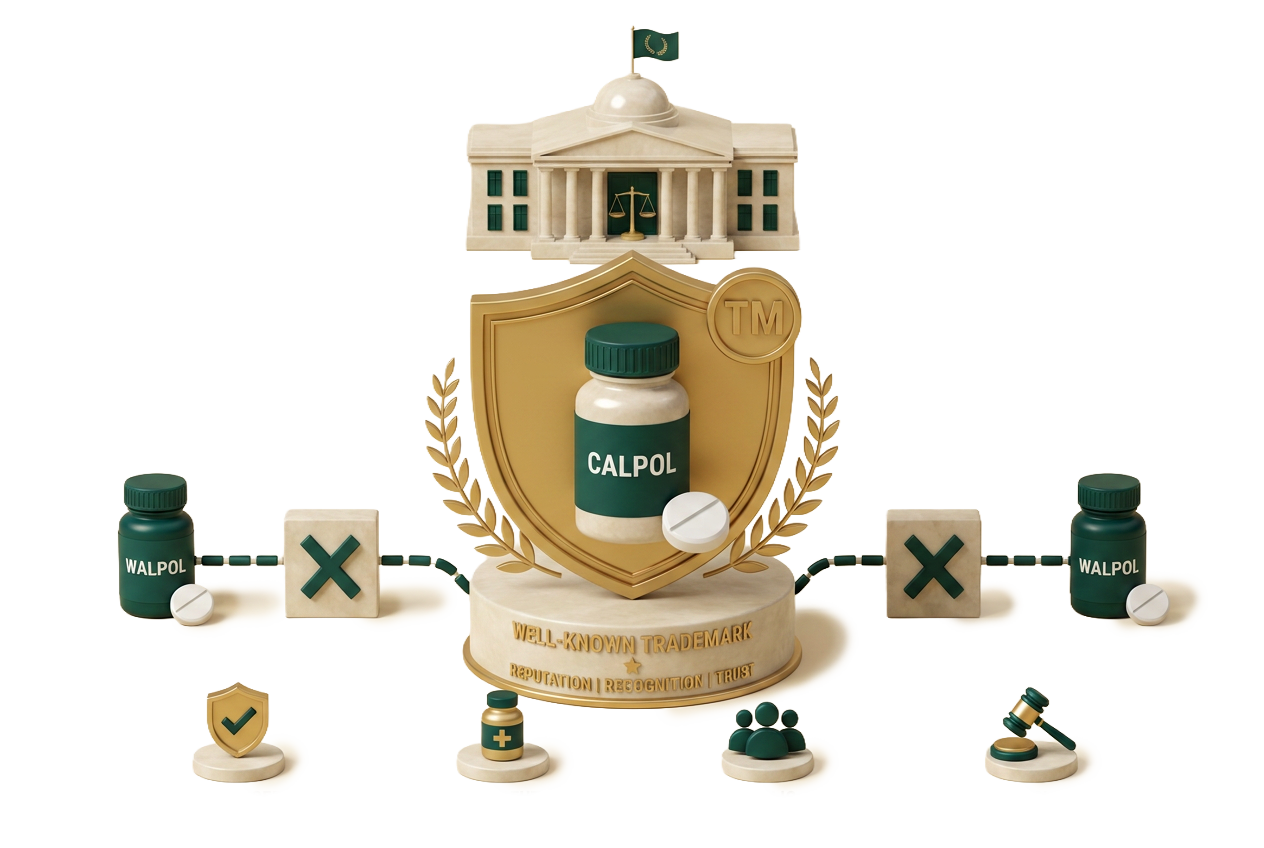
Therefore, owing to all the above-mentioned reasons reflecting the commercial presence and recognition of the mark CALPOL across India, the Court believes that the trademark CALPOL satisfies all the criteria under Section 11(6) and 11(7) in the Trade Marks Act, 1999, and declared it as a well-known trademark for medicinal and pharmaceutical products.
Conclusion
The ruling of the Delhi High Court in declaring the CALPOL trademark as a well-known trademark reaffirms the importance of commercial recognition and significance, public popularity, and reputation of a mark, especially in the medical and pharmaceutical sector in the Indian trademark jurisprudence. By granting a well-known trademark status, the Delhi High Court has put forth that pharmaceutical trademarks require enhanced protection against deceptively similar marks, where any confusion could result in dire consequences to the public. This ruling shows that trademark protection is not just limited to imitation but also the reputation and popularity built by a proprietor over a period of time. It underlines the more stringent approach taken by Indian courts towards pharmaceutical trademarks.