
Lawtitude
Doha breakthrough
The Doha breakthrough refers to the diplomatic movement in May–June 2026 where the U.S. and Iran moved from open military confrontation toward a preliminary memorandum of understanding to stop the war, reopen the Strait of Hormuz, and begin deeper negotiations on Iran’s nuclear programme and sanctions relief. It is called “Doha” because key Iranian officials travelled to Doha, Qatar, and Qatar also re-entered the back-channel process, though Pakistan remained the primary mediator. Reuters reported that the U.S. and Iran had agreed on a framework to end the war, halt the U.S. blockade of Iran, and reopen the Strait of Hormuz, with formal signing planned in Switzerland.
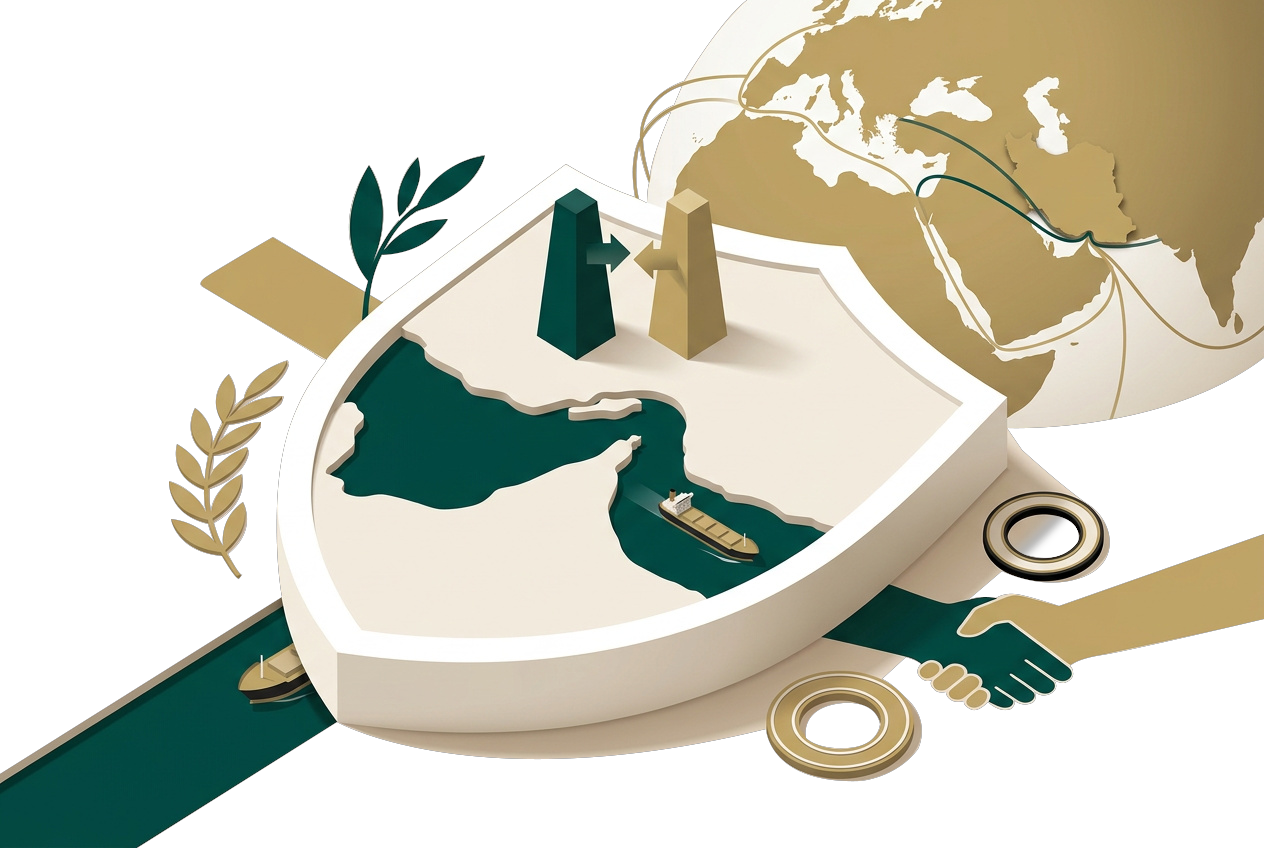
Why the crisis became so serious
The Strait of Hormuz is one of the most important energy chokepoints in the world. The IEA says around 20 million barrels per day of crude oil and oil products passed through it in 2025, equal to around 25% of global seaborne oil trade. It also says Qatar and UAE LNG exports through the Strait represent almost 20% of global LNG exports. This is why the crisis affected not only Gulf security, but also global inflation, shipping, insurance, energy supply, and stock markets.
For Asia, the risk was even more direct. The IEA notes that 80% of oil passing through Hormuz is destined for Asia, and that China and India together received 44% of crude exports passing through the Strait in 2025. It also says Bangladesh, India and Pakistan imported almost two-thirds of their LNG through Hormuz, making them highly vulnerable to disruption.
How the Doha talks developed
In the early phase, Qatar was cautious. Qatar’s Foreign Ministry said in March 2026 that it was not directly mediating between the U.S. and Iran, partly because Qatar itself had been affected by the conflict, but it supported all diplomatic efforts to end the war.
By April, Qatar’s position became clearer: it wanted the crisis to be solved regionally, not only by Washington and Tehran. Qatar’s Foreign Ministry spokesperson said the Strait of Hormuz should be reopened without conditions because it is an international passage and because resuming traffic was a priority for regional and global economies. He also stressed that the Gulf region must be part of any final solution, not ignored.
By May, Qatar and Türkiye openly supported Pakistan-led ceasefire efforts. Qatar’s Prime Minister said the crisis was “sensitive and critical,” that Hormuz had been used as leverage, and that Pakistan’s mediation should aim at ending the war, reopening Hormuz, and addressing Iran’s nuclear programme diplomatically.
Then the actual Doha breakthrough began. Reuters reported that Iranian officials, including Foreign Minister Abbas Araghchi and senior negotiators, were in Doha for talks with Qatar’s Prime Minister on a possible U.S.-Iran deal. The talks focused mainly on two issues: reopening the Strait of Hormuz and the future of Iran’s highly enriched uranium stockpile.
Main terms of the proposed U.S.-Iran understanding
According to Reuters, a senior Iranian official said the draft MoU covered three major baskets: Hormuz/navigation, financial-sanctions relief, and nuclear limits.
First, on the Strait of Hormuz, Iran would reopen the Strait immediately to all commercial vessels, while the U.S. would lift its naval blockade on Iranian ports. The U.S. blockade would begin to be lifted after signing and be completed within 30 days.
Second, on sanctions and finance, the U.S. would not impose new sanctions while the final agreement is being negotiated. The draft reportedly included temporary oil-sanctions waivers, a timetable for lifting U.S. and U.N. sanctions after a final deal, and release of about $25 billion in Iranian frozen assets.
Third, on the nuclear issue, Iran would commit not to produce or acquire nuclear weapons. Pending a final deal, Iran would freeze further enrichment and not expand nuclear facilities. The hardest issue, what to do with Iran’s highly enriched uranium, would be negotiated during the 60-day period. Reuters notes that the U.S. side wanted the stockpile destroyed or removed, while the Iranian side said the draft allowed dilution inside Iran under a future agreement.
Who supplied oil before the MoU was signed and after it was signed.
Before the Doha breakthrough, India’s crude oil was mainly supplied by a diversified mix, with Russia as the top supplier, followed by the UAE and Saudi Arabia, while the Hormuz disruption pushed India to buy more from Latin America and Africa, especially Brazil, Venezuela, Angola and Nigeria. For LPG, India was much more dependent on West Asia: Reuters reported that India bought over 90% of its LPG imports from Middle Eastern suppliers, including UAE, Qatar, Kuwait and Saudi Arabia. After the Doha breakthrough, there was no sudden “new supplier treaty”; instead, India continued its diversification strategy. Indian refiners increased supplies from ADNOC/UAE, used routes and storage around Fujairah, Zirku, Das Island and Sohar, and also bought crude from Brazil, West Africa and Saudi Arabia to keep supplies covered at least till August 2026. India is also trying to reduce LPG dependence on the Middle East by planning more U.S. LPG imports from 2026. So, in simple words: before Doha, India was dependent on Russia, UAE, Saudi Arabia and Middle Eastern LPG; after Doha, India did not abandon those suppliers, but strengthened alternate supplies from UAE, Africa, Latin America and the U.S. to reduce Hormuz risk.
Direct effect on Indian law? Not automatically.
The Doha breakthrough itself does not automatically become Indian law. Under Article 253 of the Constitution of India, Parliament has the power to make laws for implementing treaties, agreements or conventions with other countries. But here, India is not a contracting party to the U.S.-Iran MoU. Therefore, the Doha breakthrough does not by itself amend the Companies Act, SEBI law, Merchant Shipping law, Essential Commodities Act, Customs law, or FEMA.
So the correct legal position is Doha breakthrough does not directly create Indian law. But it affects how existing Indian laws operate during the crisis.
It affects maritime and shipping law
The Doha breakthrough reduces risk for Indian vessels, but does not immediately remove maritime legal obligations. PIB said Indian-flagged vessels in the Persian Gulf were being tracked through the LRIT National Data Centre, and Indian shipping companies, vessel operators and RPSLs were advised to conduct voyage-specific risk assessments and maintain communication with seafarers and families.
If Hormuz reopens, Indian shipping law and DG Shipping advisories may become less strict over time. But until the route is actually safe, shipowners still need to consider crew safety, war-risk insurance, route deviation, force majeure, and cargo delay.
So, the Doha breakthrough affects maritime law practically by shifting the legal question from “can ships safely avoid or suspend passage?” to “when is it legally reasonable to resume passage?”
It affects corporate law and SEBI compliance
For listed Indian companies, the Doha breakthrough can become a material business event. SEBI’s LODR Regulations govern disclosure obligations for listed entities. SEBI’s official LODR framework is the source of listed-company disclosure duties. Companies in oil, gas, fertiliser, aviation, shipping, logistics, paints, tyres, petrochemicals and infrastructure may need to reassess whether the Hormuz closure or reopening materially affects their operations, input costs, contracts, earnings guidance, or risk factors.
For example, Reuters reported that Indian oil marketing companies, tyre makers, paint makers and airlines gained after crude prices fell due to the peace-deal news.
So the corporate-law impact is that the boards and listed companies may have to disclose both the negative impact of the crisis and the positive impact of de-escalation if either is material to investors.
It affects board duties and risk management
Under, the Board’s Report includes risk-management-related disclosures, including risks that may threaten the company. India Code identifies Section 134 as the provision dealing with financial statements and the Board’s Report, and the official search result specifically notes the requirement of a statement on development and implementation of a risk management policy.
After the Hormuz crisis, Indian companies cannot treat geopolitical risk as remote. Boards of energy-dependent companies must consider supplier diversification, alternate routes, inventory levels, insurance, force majeure clauses, currency risk, hedging, and price-pass-through capacity.
The Doha breakthrough reduces the emergency, but it also teaches Indian boards that geopolitical chokepoints are now corporate governance risks.
It affects sanctions and trade compliance
The draft U.S.-Iran understanding reportedly includes temporary U.S. oil-sanctions waivers and a pause on new sanctions until a final deal. For India, this could reopen the possibility of more Iranian oil or energy trade in the future. But Indian companies cannot simply start trading with Iran immediately. They still need to check Indian foreign trade policy, RBI/FEMA payment rules, banking channels, insurance, shipping permissions, and the exact scope of U.S. sanctions waivers. So the Doha breakthrough affects Indian law indirectly by creating a possible need for future FEMA, customs, banking, shipping and sanctions-compliance adjustments, but no such Indian legal change happens automatically.
Conclusion
The Doha breakthrough affects India mainly by reducing oil-price pressure, supporting the rupee, improving market sentiment, and lowering the risk of energy shortage. Legally, it does not directly create Indian law, because India is not a party to the U.S.-Iran MoU. But it strongly affects Indian law through existing frameworks: the Essential Commodities Act, emergency gas-allocation orders, LPG controls, pipeline-expansion regulation, DG Shipping advisories, SEBI disclosure duties, Companies Act risk-management duties, force majeure disputes, and sanctions compliance.