
in focus
UPI Transactions Above ₹2000 To Attract Merchant Discount Rate (MDR)
The Ministry of Finance has introduced a revised Merchant Discount Rate (MDR) framework for select Unified Payments Interface (UPI) transactions, under the enabling provisions of the Payment and Settlement Systems Act, 2007. The said framework was notified on 14 September 2026, followed by a detailed applicability and clarification issued by the Ministry of Finance on 15 September 2026. And scheduled to take effect from 15 October 2026.
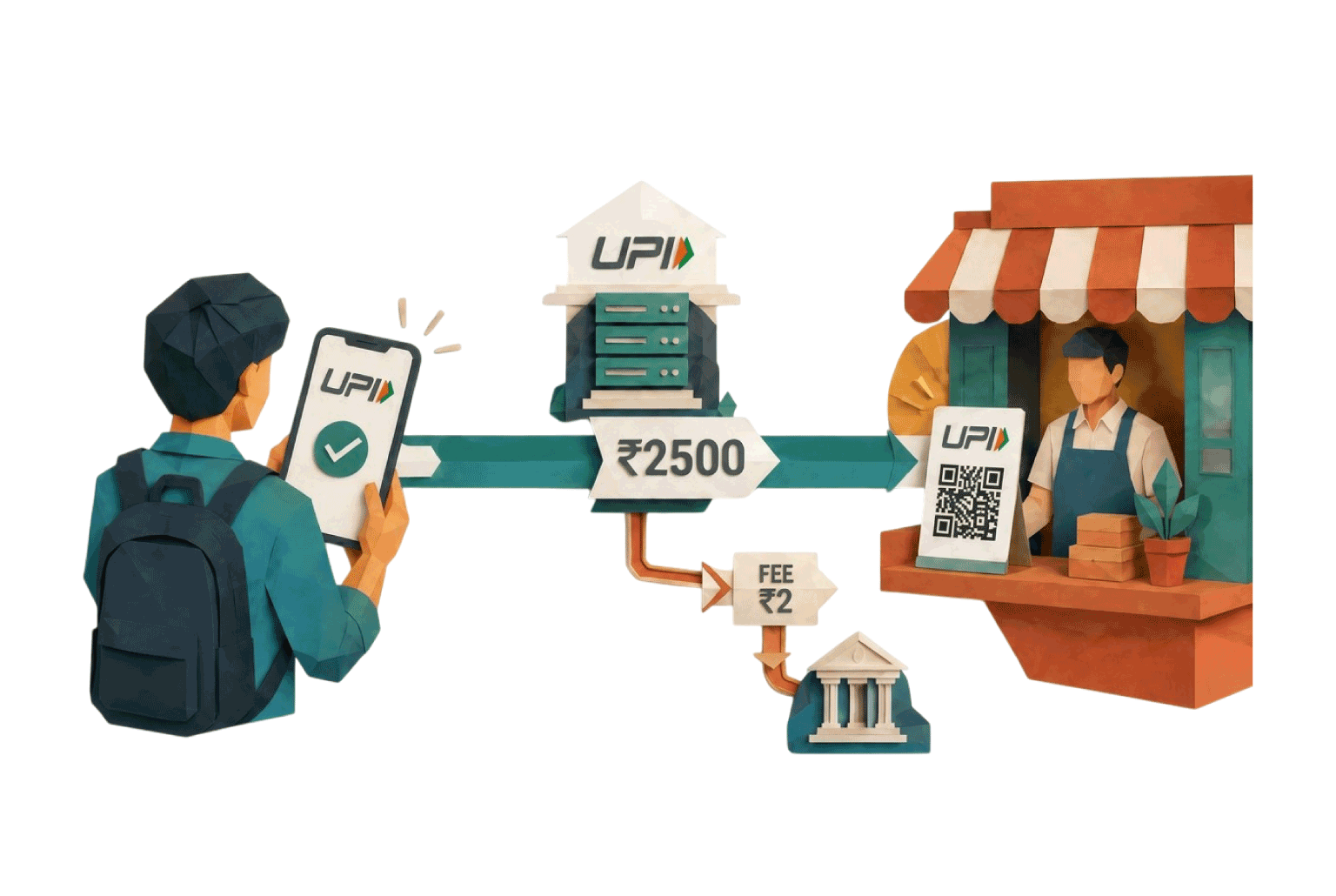
Tends to impose MDR on specified Person-to-Merchant (P2M) UPI transactions above ₹2,000, while UPI transactions between individuals will continue to remain free.
Applicable on:
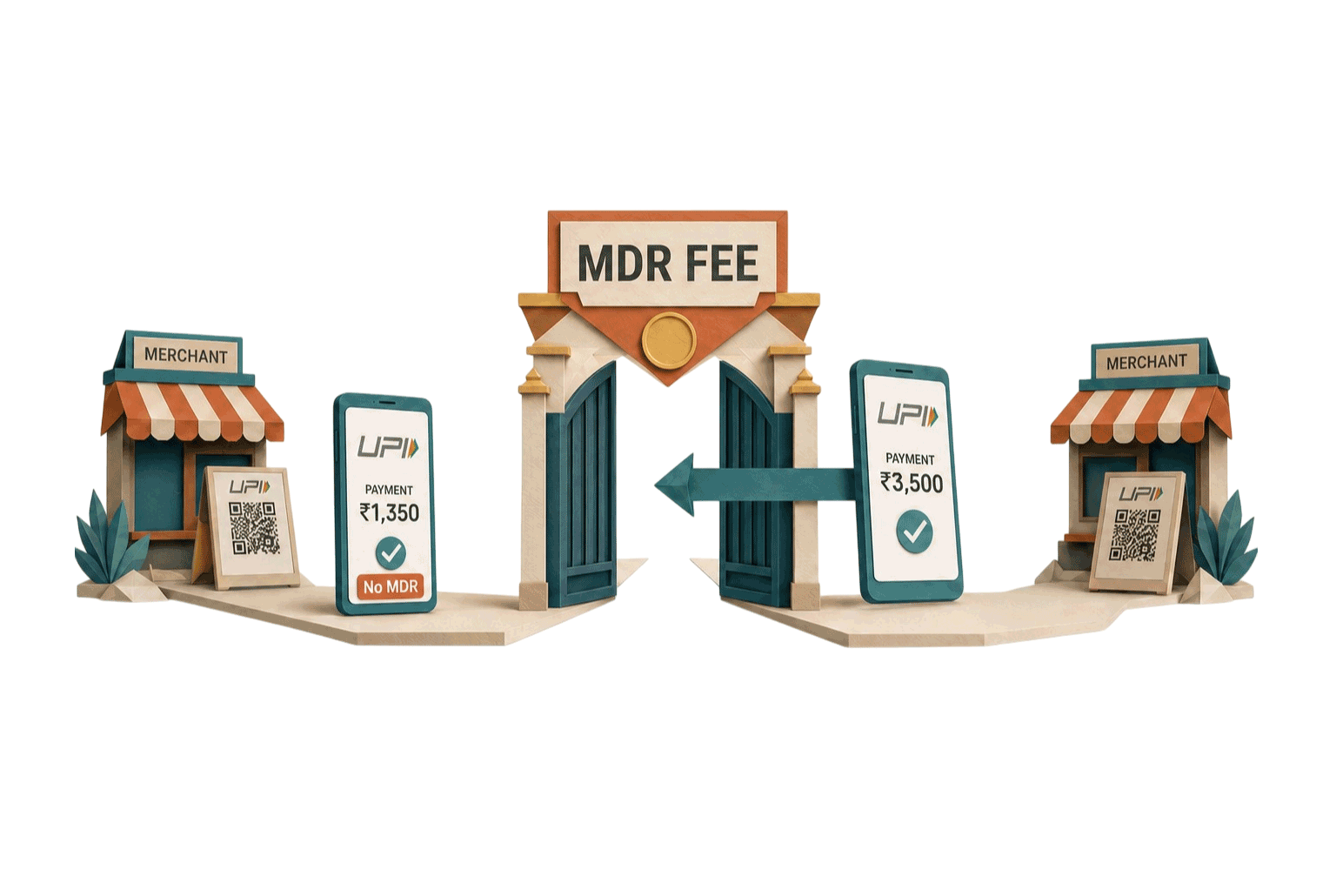
- MDR of 0.4% will apply to specified P2M UPI transactions exceeding ₹2,000. For transactions of ₹75,000 and above, MDR will be capped at ₹300 per transaction.
- Transactions above ₹2,000 in essential and thin-margin sectors, including railways, telecommunications, insurance, fuel and agricultural inputs, will attract a flat MDR of ₹5 per transaction.
- Payments relating to capital-market transactions, including mutual funds, securities, stockbrokers and dealers, will attract an MDR of 0.02%, capped at ₹300 per transaction.
Exempted for:
- Person-to-Person (P2P) transactions will continue to remain free, irrespective of the amount transferred. Individuals will not be subject to transaction fees, platform fees or other charges for sending or receiving money through UPI.
- Small merchants, including street vendors and neighbourhood businesses receiving up to ₹1 lakh per month through UPI QR codes under the P2PM category, will also continue to enjoy zero MDR on their transactions.
Charged on:
MDR is not payable by the customer. Banks have been advised to oversee and ensure that merchants do not pass the MDR on to customers as a separate UPI payment charge. Further, UPI application providers have been expressly prohibited from imposing platform fees or hidden charges on individuals for UPI transactions.
Although MDR is not intended to be recovered from customers, merchants will have to account for the additional payment-processing cost in their business operations. This could have an indirect commercial impact where businesses review their pricing, margins or payment-acceptance strategies, which ultimately imposes MDR on the customers.
Impacts:
The Government has stated that the new framework will have a limited impact on the overall merchant ecosystem. According to the Ministry of Finance, only around 4% of merchant transactions are expected to attract MDR, while approximately 96% of merchant transactions will remain unaffected as they fall below the applicable thresholds or within the zero-MDR framework
Further, the Government has emphasised that the proposed MDR is nominal and significantly lower than the MDR generally applicable to traditional debit and credit card transactions, thereby positioning UPI as a relatively lower-cost payment acceptance mechanism for merchants.
Rupay Transactions:
The revised framework continues to maintain the existing zero-MDR treatment for RuPay transactions.
Purpose:
The Ministry states that the intent behind introducing MDR is to establish a sustainable revenue model for the UPI ecosystem and reduce its dependence on government incentives, while facilitating continued investment in payment infrastructure, cybersecurity, innovation and service quality. The MDR collected from eligible merchant transactions will be distributed among the participants involved in facilitating the transaction, including the acquiring bank, issuing bank, PSP bank and UPI application provider, thereby compensating each participant for its role in processing the payment. Further, 5% of the MDR collections will be allocated to a dedicated fund aimed at promoting UPI adoption among small merchants and expanding digital-payment infrastructure in underserved areas.